When your business premises are damaged by fire, flood, storm or another insured event, the days that follow can feel overwhelming. You are trying to keep the business running, reassure staff and customers, and at the same time make sense of an insurance claim you never planned to make. A commercial loss assessor exists for exactly this moment: to take the claim off your plate and manage it properly on your behalf.
This guide explains what a commercial loss assessor actually does, how the role differs from the insurer’s loss adjuster, why commercial claims are more complex than domestic ones, and when it makes sense to bring one in.
What Is a Commercial Loss Assessor?
A commercial loss assessor is a qualified professional who manages a commercial insurance claim from start to finish on behalf of the policyholder, which is you, the business owner. They review your policy, assess the damage, prepare and document the claim, lodge it with your insurer, and then negotiate the settlement.
The key word is independent. A loss assessor is not appointed by your insurer and is not paid by your insurer. They act solely in your interest. In Ireland, public loss assessors are regulated by the Central Bank of Ireland; our firm operates under Registration No. C423441. That regulation matters: it means the person handling your claim is held to a recognised professional and conduct standard.
Loss Assessor vs Loss Adjuster: The Structural Difference
These two job titles sound almost identical, and that is exactly why so many business owners confuse them. The difference is not about competence. Both are skilled professionals. The difference is structural; it comes down to one simple question: who do they work for?
- The loss adjuster acts for the insurer. When you submit a claim, your insurance company appoints a loss adjuster to investigate it. Their job is to assess the claim from the insurer’s perspective and arrive at a figure the insurer considers fair to pay out.
- The loss assessor acts for you. A loss assessor is engaged by the policyholder to make sure the claim is fully and accurately presented, and that you receive everything you are entitled to under your policy.
Without a loss assessor, you are effectively negotiating your own claim against an experienced professional who does this every day for the insurer. That is rarely a fair contest. A loss assessor levels the field by putting equivalent expertise on your side of the table. To understand the full scope of that support, see our overview of what a commercial loss assessor can do for your business.
What a Commercial Loss Assessor Does, Step by Step
A properly managed commercial claim follows a clear sequence. Here is what that process looks like in practice.
1. Policy Review
Before anything else, the assessor reads your policy in full and interprets what it actually covers. Commercial policies are dense and easy to misread. Identifying the right cover early ensures nothing you are entitled to is missed and that the claim is built on the correct policy sections.
2. Site Assessment
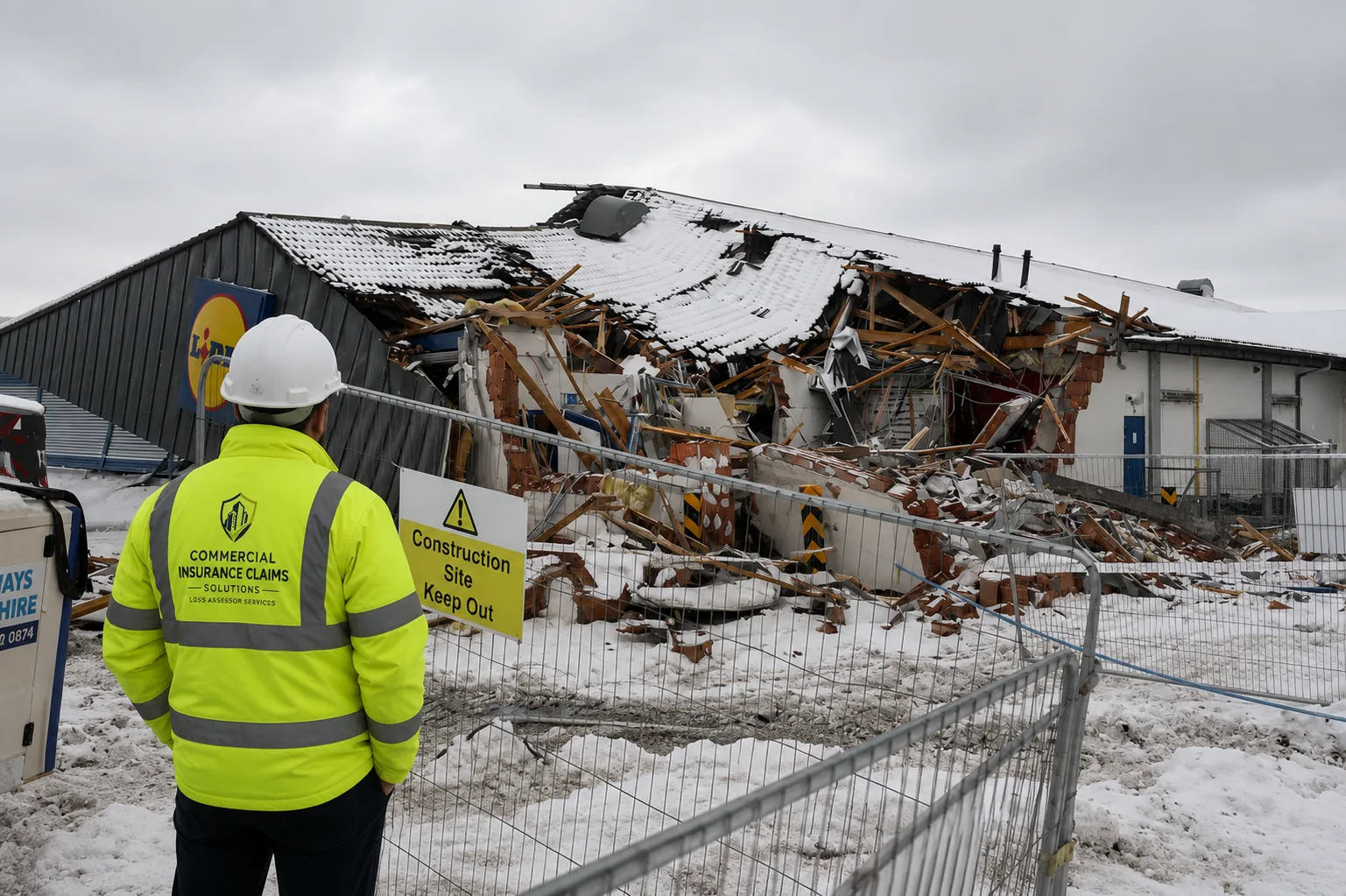
The assessor visits the premises to inspect and record the damage thoroughly. This first-hand evidence becomes the foundation of the claim, capturing the full extent of the loss before any clean-up or repair work changes the picture.
3. Schedule of Damage
Every item of damage is itemised and costed: building fabric, fittings, stock, equipment and contents. A detailed, evidenced schedule is far harder for an insurer to dispute than a rough estimate.
4. Claim Preparation and Lodging
The assessor assembles the full claim with all supporting documentation and lodges it formally with the insurer. A claim presented clearly and correctly from the outset moves faster and is less likely to stall over missing information.
5. Negotiation and Settlement
This is where experience earns its place. The assessor handles all communication and negotiation with the insurer’s loss adjuster, defending the schedule and working toward the best possible settlement under your policy. You stay informed throughout, but you are no longer the one in the room arguing your own figures.
Why Commercial Claims Are More Complex
A commercial claim is rarely just about repairing a building. Business claims carry layers that a domestic claim simply does not, and each layer needs to be quantified and argued correctly.
- Business interruption. When damage forces you to close or scale back, you lose income. A well-prepared claim should account for that lost trade, not just the bricks and mortar. This is one of the most under-claimed and misunderstood areas of commercial cover; our guide to a business interruption insurance claim explains how it is calculated.
- Multi-layer policies. Commercial cover often combines buildings, contents, stock, plant and machinery, and additional sections such as glass or refrigerated goods. A single incident can trigger several of these at once, and each has its own terms and limits.
- Higher values and technical losses. Larger sums mean closer scrutiny from insurers, and complex damage such as fire or subsidence demands detailed technical evidence to support every figure.
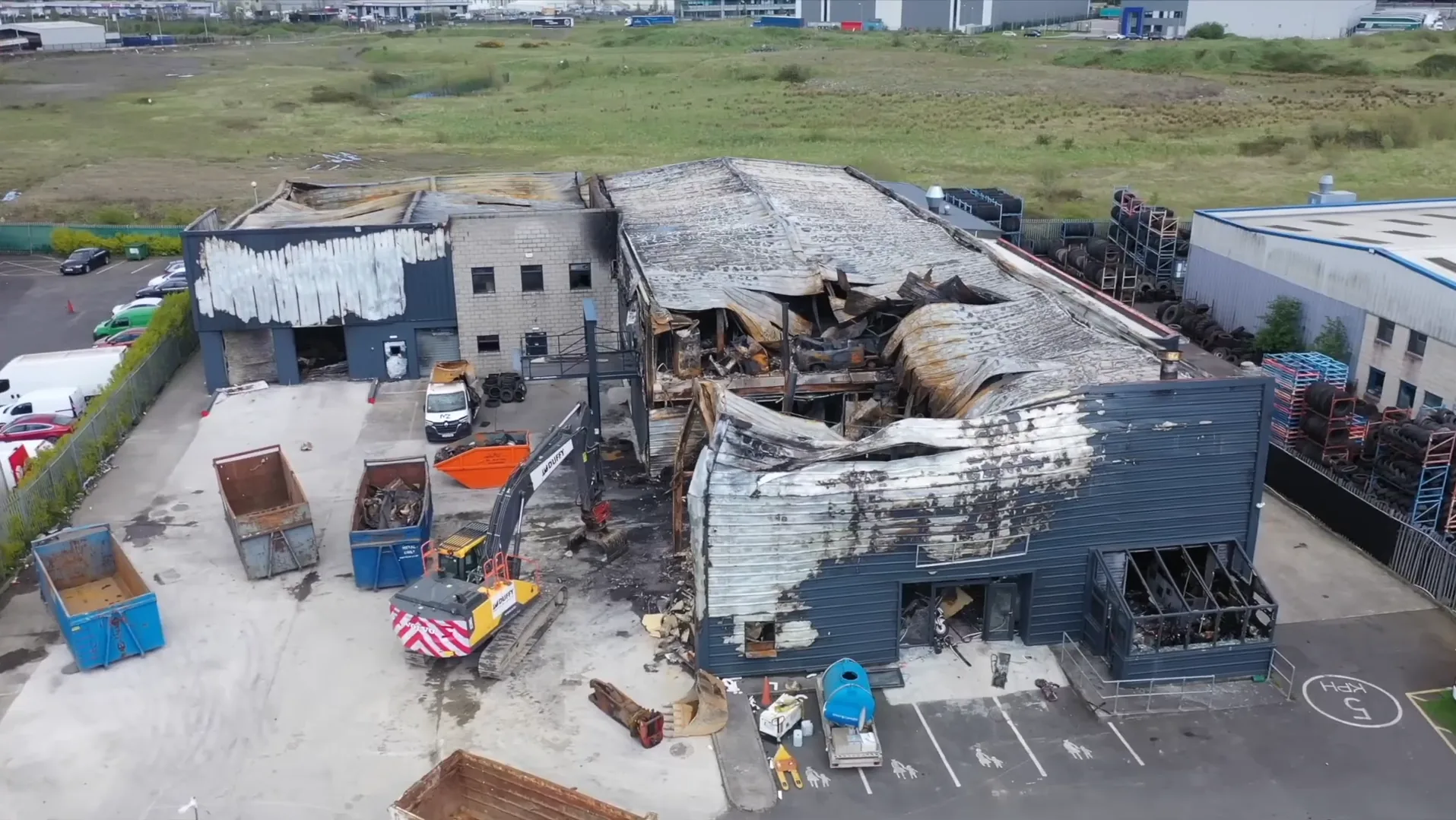
Fire is a good example of how quickly these layers stack up. A single fire can damage the building, destroy stock, halt trading and raise difficult questions about cause and reinstatement. If that is your situation, our page on a commercial fire damage claim sets out what to expect.
When Should You Engage a Loss Assessor?
The honest answer is: as early as possible, ideally before you have any detailed contact with the insurer about figures. The earlier an assessor is involved, the more evidence can be captured and the better the claim can be structured from day one.
It is especially worth getting advice if any of the following apply:
- The damage is significant or affects more than one part of your cover.
- Your business has had to close, reduce hours or turn away customers.
- You are unsure exactly what your policy covers.
- You simply do not have the time or expertise to manage a claim while running the business.
Engaging an assessor early does not mean you distrust your insurer. It means you want the claim handled to the same professional standard the insurer applies on its own side.
How the No Win, No Fee Model Works
Cost is the first concern for most business owners, and it is a fair one. Our service operates on a no win, no fee basis. The fee is taken as a percentage of the final settlement and is agreed with you in advance, in writing, before any work begins. If there is no settlement, there is no fee.
This model keeps everyone’s interests aligned. Our goal is the same as yours: to secure the fullest settlement you are entitled to under your policy. Because the fee is linked to the outcome, you are never out of pocket for professional help at a time when cash flow is already under pressure.
If your premises have been damaged and you are not sure where to start, talk to us. A free, no obligation consultation will tell you where you stand, what your policy is likely to cover, and how we can help you take the weight of the claim off your shoulders so you can focus on getting back to business.